
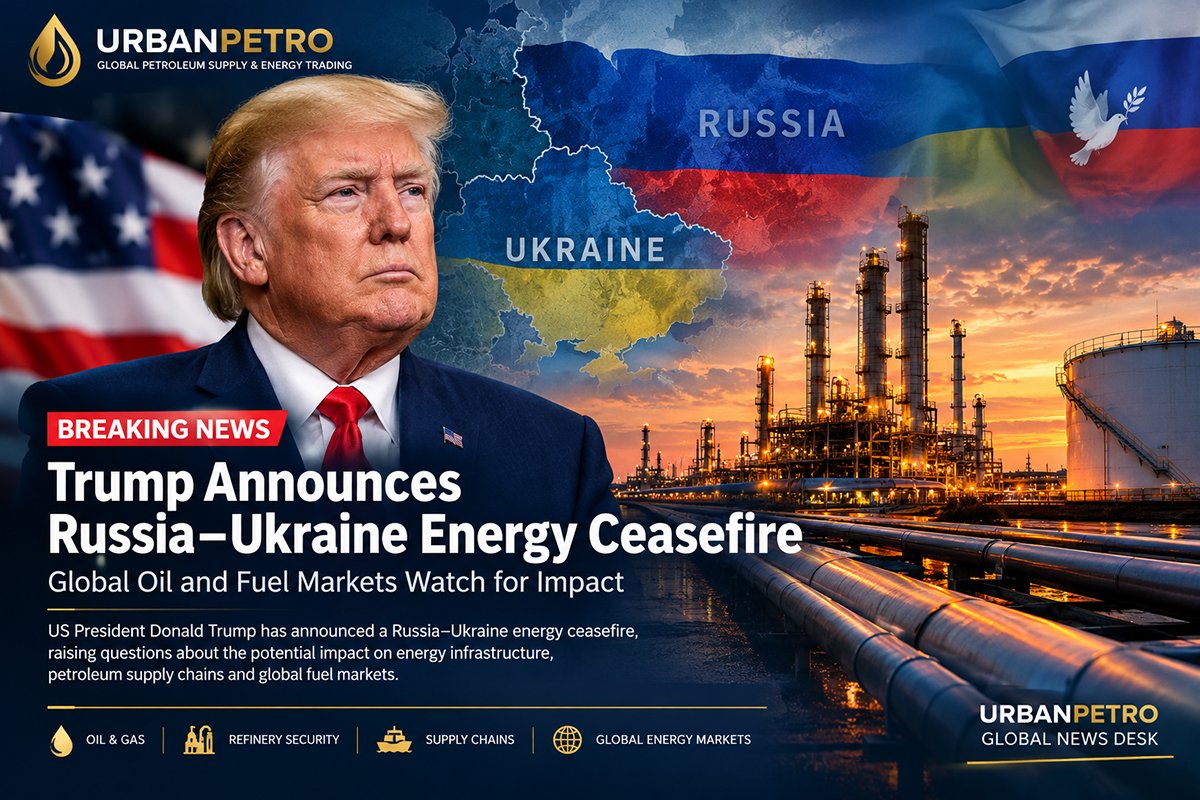
Trump Announces Russia–Ukraine Energy Ceasefire as Global Oil and Fuel Markets Watch for Impact
Published by: UrbanPetro Global News Desk
Date: October 11, 2026
Category: Global Energy | Geopolitics | Oil and Gas
Trump Announces Energy Ceasefire Amid Ongoing Russia–Ukraine Conflict
US President Donald Trump has announced a Russia–Ukraine energy ceasefire, raising questions about the potential implications for energy infrastructure, petroleum supply chains, and global fuel markets.
The announcement comes amid continued geopolitical uncertainty surrounding the conflict, which has repeatedly placed oil refineries, fuel storage facilities, electricity networks, and other critical energy infrastructure at risk.
However, the status and terms of the proposed ceasefire remain unclear. Ukrainian President Volodymyr Zelensky has indicated that he was not aware of an agreed arrangement and reiterated Ukraine’s position that it would halt attacks on Russian refineries if Russia stopped attacking Ukrainian energy infrastructure.
Independent confirmation of the agreement’s implementation remains essential before the announcement can be treated as an operational ceasefire.
Why the Development Matters to Global Energy Markets
Russia remains a major participant in international energy markets, while Ukraine occupies a strategically important position in Eastern Europe’s energy and transportation landscape.
Attacks on refineries and other energy facilities can disrupt processing capacity, reduce the availability of certain petroleum products, and complicate fuel logistics. A verified and sustained halt to such attacks could help reduce some operational risks.
For international petroleum traders, refiners, distributors, and industrial fuel buyers, the key question is whether the announcement translates into an enforceable agreement that protects energy infrastructure.
The immediate market implications will depend on the terms of the arrangement, the responses of both governments, and developments on the ground.
Potential Implications for Diesel and Refined Petroleum Products
The Russia–Ukraine conflict has contributed to uncertainty across regional energy markets, particularly when attacks threaten refining operations or transportation infrastructure.
If an energy ceasefire is formally confirmed and implemented, potential developments could include:
Reduced risks of further damage to selected refinery and energy infrastructure.
Improved operational planning for some regional petroleum supply chains.
Changes in market expectations concerning the availability of diesel and other refined products.
Reduced geopolitical risk premiums if market participants gain confidence in the agreement’s durability.
These are potential outcomes, not confirmed market effects. A ceasefire would not automatically restore damaged facilities, increase exports, or guarantee lower petroleum prices.
Global prices would continue to depend on supply and demand, refinery utilization, inventories, freight costs, sanctions, insurance premiums, and other geopolitical developments.
What International Petroleum Traders Should Monitor
For companies engaged in international petroleum trading, the announcement highlights the importance of monitoring verified developments rather than relying exclusively on political statements.
Market participants should pay particular attention to:
1. Official confirmation: Whether Moscow and Kyiv publicly confirm the same ceasefire terms.
2. Refinery security: Whether attacks on refining, storage, pipeline, and electricity infrastructure actually stop.
3. Petroleum exports: Whether export volumes and delivery schedules change following the announcement.
4. Diesel market conditions: Whether regional diesel availability, refining margins, and wholesale prices show measurable changes.
5. Shipping and insurance: Whether transportation risks and insurance costs change as the security situation develops.
These indicators will provide a stronger basis for assessing the commercial consequences than the announcement alone.
UrbanPetro’s Market Perspective
UrbanPetro recognises that geopolitical developments can influence petroleum supply chains, product availability, transportation costs, and international trading decisions.
For buyers and sellers of EN590 diesel, Jet A-1 aviation fuel, gasoline, crude oil, and other petroleum products, developments involving major energy-producing and transit regions warrant close attention.
Nevertheless, commercial decisions should be based on independently verified supply information, contractual terms, reliable counterparties, and appropriate due diligence.
The announcement of an energy ceasefire should not, by itself, be interpreted as confirmation of additional petroleum allocations, improved export availability, or an immediate change in international fuel prices.
Outlook: Confirmation Will Determine the Market Impact
The next stage will depend on whether the announced ceasefire receives formal confirmation and is implemented by both sides.
A sustained reduction in attacks on energy infrastructure could ease some regional supply risks. Conversely, continued hostilities or disagreement over the terms could limit the announcement’s practical significance.
For now, international energy-market participants will be watching for official statements, verified developments at energy facilities, and measurable changes in petroleum supply and trading conditions.
UrbanPetro will continue monitoring developments affecting global petroleum markets, refinery operations, fuel logistics, and international energy security.
UrbanPetro Global News Desk
Global Petroleum Supply & Energy Trading
Website: www.urbanpetro.com
Email: info@urbanpetro.com