

GLOBAL DIESEL ALERT: Crude Supply Pressure Eases, But Diesel Markets Remain Extremely Tight
By Mr. Baiju Jayachandran
Chief Editor | UrbanPetro Global News
September 16, 2026 | Global Energy Markets
Global Diesel Alert: Crude Eases but Diesel Markets Stay Tight | UrbanPetro
Crude prices retreat, but the diesel market is sending a different signal
The global oil market is entering a new and unusually divided phase: crude supply concerns are showing signs of easing in some corridors, while diesel and other refined-product markets remain under intense pressure.
On September 16, reports that Saudi Arabia is offering additional crude cargoes to Asian refiners through ship-to-ship transfers off Oman’s Sohar port helped reduce some immediate fears surrounding Saudi export disruptions. Brent crude moved lower during Wednesday trading, while West Texas Intermediate also retreated.
But the retreat in crude prices should not be interpreted as a return to normal conditions.
The refined-product market is telling a considerably tighter story.
Asian refining margins for 10-ppm sulphur diesel surged above $87 per barrel on September 16, reaching an all-time high according to LSEG pricing data reported by Reuters. The margin was approximately four times the pre-war level of around $22 per barrel and exceeded the previous record of $85.60 set in March.
For global fuel buyers, refiners, traders, shipping companies and governments, this divergence may be one of the most important energy-market developments of the week.
Crude may be finding alternative routes. Diesel supply is proving much harder to replace.
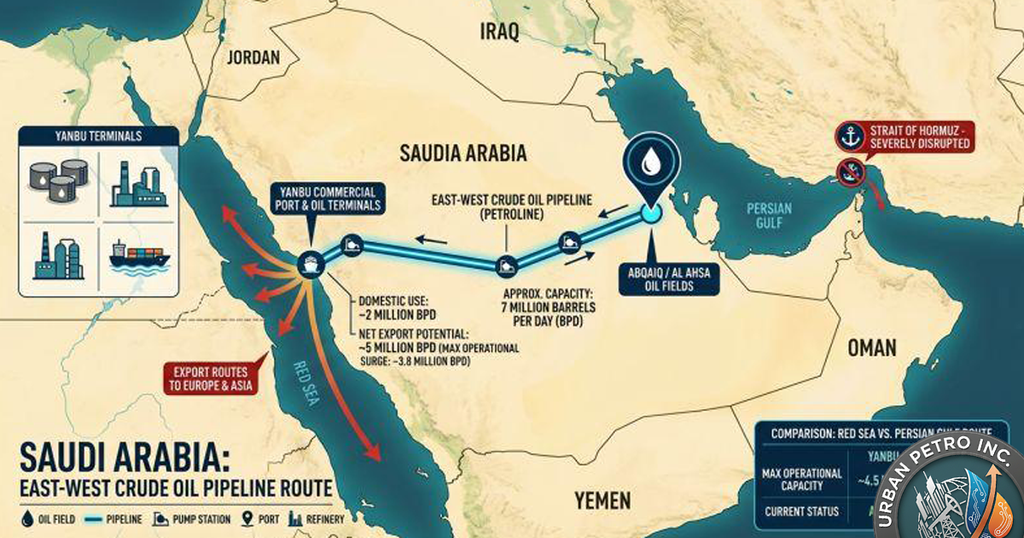
Saudi Arabia finds a route around a damaged export system
Saudi Arabia’s ability to redirect some crude through alternative logistics is providing temporary relief to the physical crude market.
Following attacks that damaged the country’s East-West pipeline system serving the Red Sea export route, Saudi Arabia has reportedly offered additional crude cargoes to Asian refiners through ship-to-ship transfers near Oman’s Sohar port.
The development helped ease some fears that Saudi export disruptions would immediately remove even more barrels from international markets. Reuters reported that Brent and WTI prices declined during Wednesday trading following the reports.
However, the workaround does not eliminate the underlying logistics problem.
Instead, it demonstrates how energy companies and producing nations are attempting to reroute supplies around damaged infrastructure and disrupted maritime corridors.
That distinction matters.
A barrel of crude that reaches a buyer through a longer or more complicated route is still available to the market—but the transportation system becomes more expensive, more vulnerable and more dependent on available vessels and secure waterways.
And crude is only one part of the equation.
Diesel is becoming the market’s critical pressure point
The most striking development is occurring further down the supply chain.
Diesel is not simply another refined petroleum product. It is fundamental to freight transportation, agriculture, construction, mining, industrial production, power generation and commercial activity across much of the global economy.
The International Energy Agency estimates that diesel/gasoil represents almost 30% of global oil demand, making the current refined-product squeeze particularly significant.
The IEA’s September Oil Market Report says the increase in crude prices has been substantially smaller than the increase in refined-product prices, with diesel and gasoil markets experiencing some of the most acute tightness. U.S. diesel prices exceeded $200 per barrel in early September, according to the IEA, while European and Asian markets have also experienced severe pressure.
The situation in Asia has now become especially notable.
Reuters reported on September 16 that the refining margin for Asian 10-ppm sulphur diesel had exceeded $87 per barrel. The report said Asian refiners are increasing crude processing and diesel production where possible, while additional cargoes are being directed toward markets experiencing shortages, including Africa.
This is a classic sign of a stressed physical market:
refiners are being strongly incentivized to maximize diesel production, but the available system still has difficulty replacing lost regional supply.
The 507-million-barrel warning
Behind the immediate diesel squeeze is a much larger inventory story.
The IEA reported that global observed oil inventories fell by another 95 million barrels during August.
That brought cumulative inventory withdrawals since February to approximately 507 million barrels, equivalent to an average draw of around 2.8 million barrels per day.
Inventories are one of the world’s most important shock absorbers.
When production or transportation is disrupted, commercial and strategic stocks can temporarily compensate for missing supply.
But when inventories decline for months, that buffer becomes progressively smaller.
This is why today’s market cannot be evaluated solely by looking at the Brent crude price.
The more important question is:
How much spare capacity remains across the entire crude-to-fuel supply chain?
That chain includes production, pipelines, ports, tankers, refineries, storage terminals, product exports and final delivery infrastructure. Pressure anywhere in that chain can affect the final price of diesel.
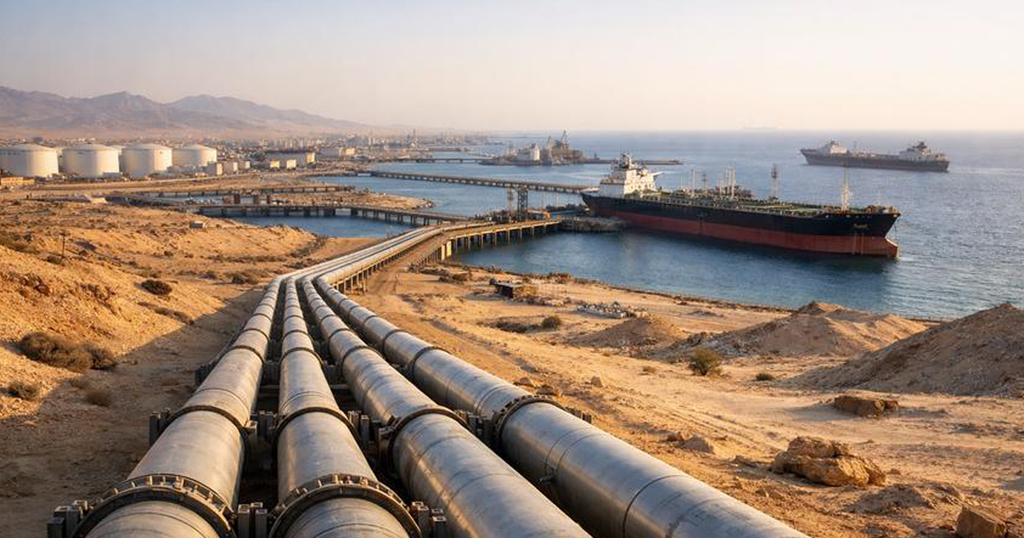
Gulf diesel exports have been severely disrupted
The IEA’s latest report provides another important warning.
Total Gulf oil exports in August were estimated at approximately 13 million barrels per day, nearly half their pre-war level.
The disruption has been particularly severe for refined products.
The agency estimates that refined-product and LPG exports from the Gulf were nearly 60% lower than in February, representing approximately 3.7 million barrels per day of lost exports.
Diesel and gasoil exports have been especially affected.
According to the IEA, Gulf countries exported an average of only about 390,000 barrels per day of diesel/gasoil in August, slightly more than one-quarter of their pre-war level.
The impact is even more significant when Russian refining disruptions are included.
Combined Gulf and Russian diesel/gasoil exports were approximately 1.6 million barrels per day lower in August than in February, when those regions accounted for almost 45% of global seaborne diesel trade.
That creates a major challenge for importing regions.
Other refiners can increase output, but they cannot instantly replace every barrel lost from the world’s largest exporting regions.
Asia is responding—but the margin comes at a price
Asian refiners are responding to the shortage by increasing crude processing and maximizing diesel output.
The extraordinary refining margins provide a powerful economic incentive.
However, this response has limits.
Refineries have physical capacity constraints. Maintenance schedules cannot always be changed immediately. Feedstock quality matters. Shipping availability matters. Storage capacity matters.
And the refinery itself must have access to crude.
The IEA says global refinery throughput reached approximately 81.4 million barrels per day in August, an increase of 960,000 barrels per day from July—but still 4.2 million barrels per day below the same period a year earlier.
For 2026 as a whole, global refinery runs are projected to decline by approximately 2.6 million barrels per day to 81.5 million barrels per day. That means the refining system is being asked to respond to a supply shock while operating with less overall throughput than a year earlier
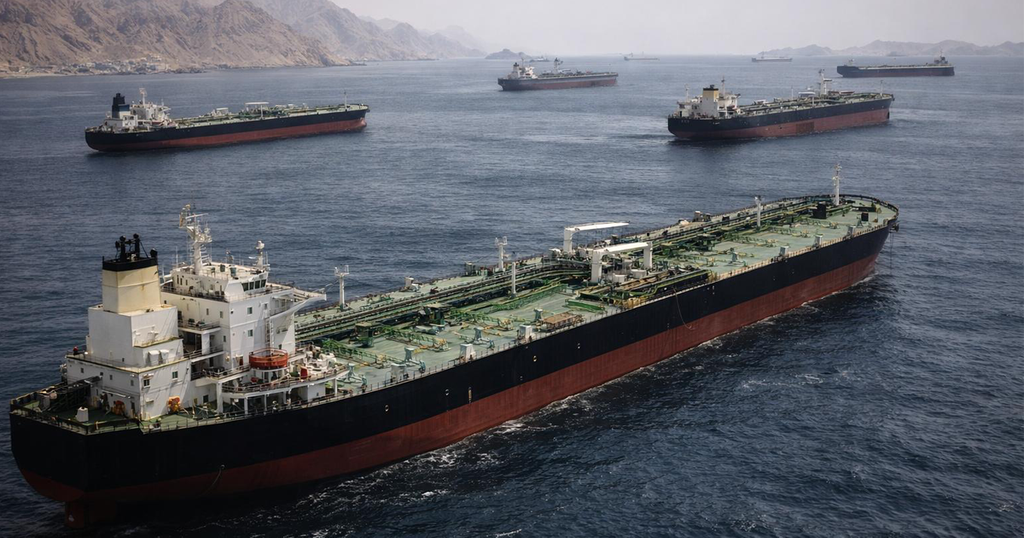
Shipping has become part of the energy equation
The energy crisis is no longer just a production story.
It is increasingly a logistics story.
The IEA reported that oil-on-water inventories declined by approximately 65 million barrels in August as tanker traffic from the Middle East came under renewed attack.
Tanker costs have also risen sharply as security risks increase.
Meanwhile, preliminary shipping data reported on September 16 showed only four vessel transits through the Strait of Hormuz on the previous day, compared with seven the day before and a recent 10-day average of approximately 18.
The Strait is strategically important because of the enormous volume of energy that historically passes through the waterway.
Reduced traffic does not automatically mean every shipment is permanently lost.
But it increases uncertainty.
And uncertainty carries a price.
Longer routes, security measures, vessel availability, insurance costs, delays and additional handling can all increase the delivered cost of petroleum products even when the underlying crude price is falling.
Why the crude price can fall while diesel remains expensive
This is the central issue facing energy markets today.
A reduction in the crude benchmark does not necessarily translate into an immediate reduction in diesel prices.
The final diesel price is influenced by several components:
- Crude oil cost
- Refining margins
- Refinery utilization
- Diesel inventories
- Regional supply and demand
- Shipping costs
- Insurance and security costs
- Port availability
- Product specifications
- Taxes and local market conditions
- Currency movements
- Storage and terminal costs
When refined-product supply is unusually constrained, diesel can remain expensive even when crude prices temporarily retreat.
That is precisely the divergence now appearing in international markets.
The IEA says diesel/gasoil prices in the United States surpassed $200 per barrel in early September and were approximately 94% above pre-war levels.
In the United States, Reuters also reported that the national average retail diesel price had crossed $6 per gallon earlier in September for the first time.
The result is a market in which consumers may see crude headlines suggesting relief while transportation and industrial fuel markets continue to experience significant pressure.
Europe is also exposed to the refined-product squeeze
Europe remains particularly sensitive because of its dependence on imported energy and its exposure to disruptions affecting Middle Eastern and Russian supply.
The IEA says Atlantic Basin refining margins reached record levels in August, driven by sharply higher diesel cracks. At the same time, rising freight costs have placed pressure on refinery economics in Singapore and other markets.
Reuters has separately reported that Europe’s fuel market has been affected by disruptions to Middle Eastern supplies and Russian refining output.
Nigeria’s Dangote refinery has also emerged as an important supplier of fuel to Europe amid the disruption, illustrating how the crisis is changing traditional trade flows.
This redistribution of supply is likely to remain a major feature of international petroleum trading while conventional routes remain disrupted.
The next challenge: rebuilding inventories
Even if major supply routes begin reopening, the energy market may not immediately return to normal.
This is one of the most important observations in the current market.
Shell and Equinor executives warned on September 16 that the mechanisms previously absorbing supply shocks are becoming weaker. Reuters reported that the global market has already lost approximately 1.6 billion barrels of crude and condensates and around 36 million metric tons of LNG since the beginning of the conflict in late February, according to Shell calculations.
The same Reuters report noted that even if disrupted energy chokepoints reopen, infrastructure and supply-chain bottlenecks could delay a full recovery well into 2027, assuming no additional infrastructure damage.
This creates a second-stage risk.
The first stage of the crisis is losing supply.
The second stage is rebuilding the inventories that were consumed to compensate for the shortage. Those two processes are not necessarily simultaneous
What global fuel buyers should watch
For governments, industrial users, logistics companies, airlines, mining operations and commercial fuel buyers, several indicators deserve close attention over the coming weeks.
1. Asian 10-ppm diesel margins
The move above $87 per barrel is an important indicator of physical market stress.
2. Gulf diesel exports
A sustained recovery in Gulf refined-product exports would indicate improving physical availability. Continued weakness would signal ongoing tightness.
3. Strait of Hormuz vessel traffic
Increasing traffic would suggest improving logistics conditions. Persistently low traffic would maintain risk premiums across crude and refined products.
4. Global inventories
The 507-million-barrel cumulative draw is a major warning indicator. Further inventory declines could reduce the market’s ability to absorb another supply disruption.
5. Refinery utilization
The global refining system is currently operating under significant pressure. Higher throughput can help rebuild product inventories, but refinery capacity has physical limits.
6. Freight and insurance costs
Even if crude becomes cheaper, rising transportation and security costs can continue to support delivered fuel prices.
UrbanPetro Market View
The latest developments point toward a market that is becoming increasingly differentiated.
Crude availability and diesel availability can no longer be treated as the same story.
Saudi Arabia’s reported efforts to redirect crude through Oman have provided some relief to crude-market concerns. At the same time, the extraordinary refining margins for 10-ppm diesel demonstrate that the physical refined-product market remains under severe pressure.
For international buyers, this means headline crude prices may provide only part of the picture.
The critical variables are increasingly product availability, refinery capacity, shipping routes, inventories and delivered logistics costs.
The IEA’s latest assessment reinforces that point: global inventories have already fallen by 507 million barrels since February, while refined-product exports from key Gulf producers remain substantially below pre-war levels.
The global petroleum system is therefore moving into a phase where logistics and refined-product availability may matter as much as the headline crude benchmark.
The bottom line
Crude prices may be cooling—but the diesel market has not received the same relief.
With Asian 10-ppm diesel refining margins at record levels, global inventories sharply reduced and Gulf refined-product exports still severely constrained, the world’s fuel market remains vulnerable to another disruption.
The next major energy-market question may not be:
“Where will Brent trade next?”
It may instead be:
“How quickly can the world restore sufficient diesel production, inventories and reliable shipping capacity?”
For fuel markets, that question could prove more consequential than the next daily move in crude.
UrbanPetro News will continue tracking global crude, diesel, refinery, shipping and petroleum-product markets as developments unfold.

By Mr. Baiju Jayachandran
Chief Editor | UrbanPetro Global News
September 16, 2026 | Global Energy Markets