

By Mr. Baiju Jayachandran
Chief Editor, UrbanPetro Global News
September 17, 2026
Global oil markets remain under pressure as supply disruptions, infrastructure risks and declining tanker traffic keep traders focused on the Middle East.
GLOBAL ENERGY MARKETS — Crude oil prices remained above the psychologically important $100-per-barrel level on September 17, 2026, despite a modest decline during the latest trading session.
Brent crude futures settled at approximately $104.82 per barrel, while U.S. West Texas Intermediate (WTI) settled at $101.91 per barrel. Both benchmarks declined during the session but remained firmly above $100, reflecting continued concern over the security and availability of regional energy supplies.
Middle East Supply Disruptions Remain the Central Market Concern
Energy traders are closely monitoring disruptions involving Saudi Arabia’s critical East-West oil pipeline, which provides an important alternative route for moving crude toward the Red Sea and global export markets.
Reuters reported that three pumping stations serving the approximately 1,200-kilometer East-West pipeline were damaged in a recent attack. Industry sources gave varying estimates for repairs, with some indicating that restoration could take several weeks, although partial operations could potentially resume sooner.
The pipeline has historically provided Saudi Arabia with a route that reduces dependence on shipments through the Strait of Hormuz. According to industry assessments cited by Reuters, it has been capable of transporting approximately 4–5 million barrels per day, equivalent to roughly 4–5% of global oil supply.
Strait of Hormuz Traffic Under Pressure
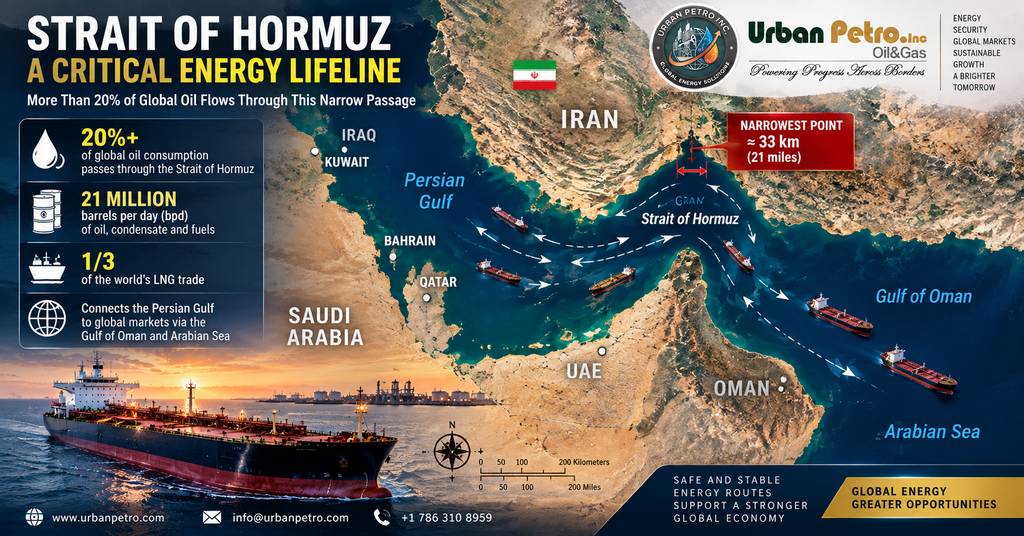
Another major indicator being watched by the energy industry is shipping activity through the Strait of Hormuz, one of the world’s most important energy corridors.
Preliminary ship-tracking data reported by Reuters showed that only three commercial vessels transited the Strait of Hormuz on Wednesday, compared with 12 the previous day and a 10-day average of approximately 17. The data may not capture vessels operating with their automatic identification systems switched off.
Reduced shipping activity adds another layer of uncertainty for crude oil, petroleum products and LNG markets, particularly if disruptions persist.
Saudi Arabia Seeks Alternative Export Routes
Saudi Arabia has reportedly been seeking alternative ways to move additional crude to international buyers, including offshore ship-to-ship transfers near Oman’s Sohar port.
Such alternative logistics could help partially offset some supply losses associated with disruptions to the East-West pipeline. However, market participants continue to assess how sustainable these arrangements would be if regional security problems persist.
Diesel Markets Face Additional Pressure
The pressure is not limited to crude oil.
Global diesel markets are also experiencing tightening conditions. Reuters reported that European gasoil futures and U.S. ultra-low-sulfur diesel futures recently reached record highs as disruptions to energy infrastructure in the Middle East and Russia affected fuel availability.
For fuel importers, refiners, shipping companies and industrial consumers, this creates additional uncertainty around procurement costs, freight, insurance and delivery schedules.
What the Market Is Watching Next
The direction of oil prices will depend heavily on several factors:
- Restoration of Saudi Arabia’s East-West pipeline capacity
- Security conditions around the Strait of Hormuz
- Tanker movements through the Gulf and Red Sea
- Availability of alternative Saudi crude export routes
- Refinery operating rates and diesel inventories
- Further attacks on regional energy infrastructure
- Diplomatic developments affecting the wider Middle East conflict
While Thursday’s decline in crude prices indicates some easing of immediate supply concerns, the physical oil market remains tight and the possibility of further disruptions continues to influence prices. Reuters also reported that tanker traffic through the Strait of Hormuz remains significantly below its recent average.
UrbanPetro Market Perspective
For global energy buyers, the current environment highlights the importance of diversified sourcing, reliable logistics and close monitoring of physical petroleum markets.
The combination of crude remaining above $100, elevated diesel prices and continued uncertainty around major transportation routes means that petroleum buyers and sellers are likely to remain highly sensitive to developments across the Middle East.
UrbanPetro Global News will continue monitoring crude oil, diesel, Jet A1, LNG and global petroleum supply developments as the market evolves.
By Mr. Baiju Jayachandran
Chief Editor — UrbanPetro Global News
