
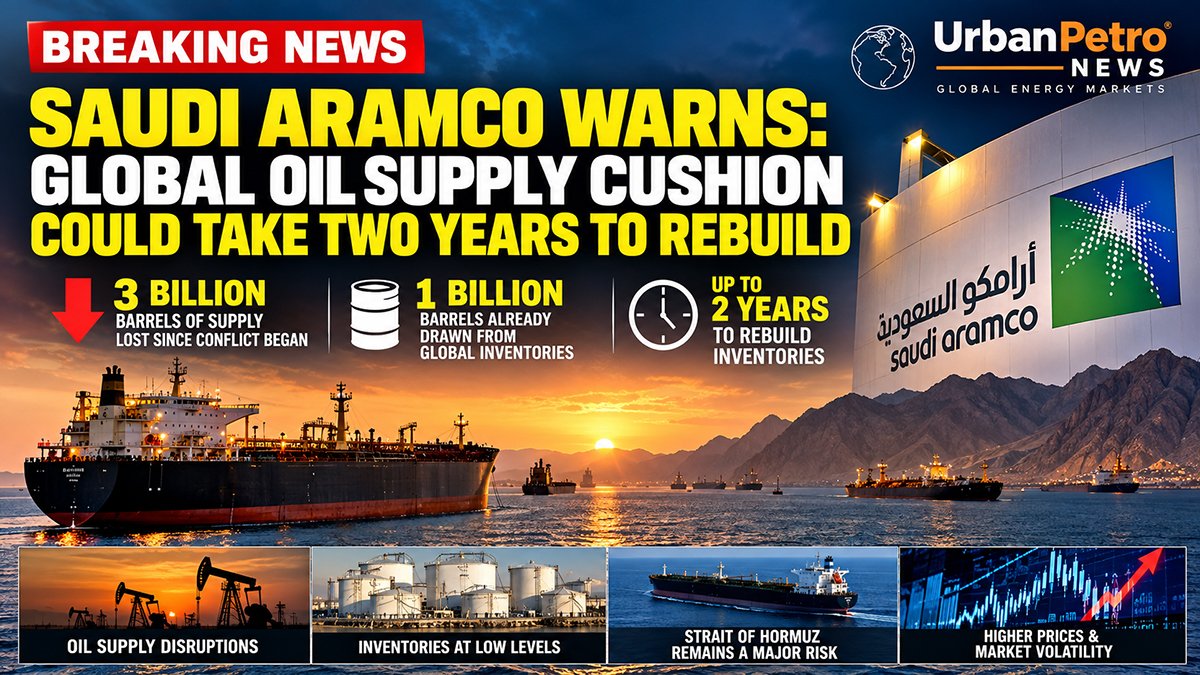
Saudi Aramco Warns Global Oil Supply Cushion Could Take Two Years to Rebuild
LONDON — October 5, 2026 — The global oil market is facing a prolonged supply challenge after Saudi Aramco Chief Executive Officer Amin H. Nasser warned that rebuilding depleted global petroleum inventories could take up to two years.
Speaking at the Energy Intelligence Forum in London, Nasser said the recent disruption to global energy flows has significantly reduced the world’s supply cushion, describing the remaining resilience in the oil system as “scarily thin.”
According to Reuters, nearly 3 billion barrels of oil supply have been lost since the beginning of the Middle East conflict, while approximately 1 billion barrels have already been drawn from global inventories to help compensate for the disruption.
Global Oil Market Under Pressure
The warning comes as energy markets continue to deal with disruptions affecting crude production, exports, shipping routes and refining operations.
Although some oil flows have begun to recover, rebuilding inventories is expected to be considerably more difficult than restoring short-term production and exports. Global demand continues to require large volumes of crude and refined petroleum products every day, limiting the ability of producers to rapidly rebuild strategic and commercial stocks.
Nasser’s comments highlight a critical issue for governments, refiners, traders and fuel buyers: oil availability is not determined only by production capacity, but also by inventories, transportation infrastructure and the reliability of major supply routes.
Strait of Hormuz Remains a Major Risk
The Strait of Hormuz remains one of the world’s most important energy chokepoints, carrying a substantial share of global petroleum trade.
Any prolonged disruption to the route could place additional pressure on crude oil, diesel, jet fuel and other refined petroleum products, while also increasing shipping, insurance and logistical costs.
Saudi Aramco is reportedly examining additional export routes and overseas storage options as part of efforts to improve the resilience of its supply network.
What It Means for Global Petroleum Markets
For international fuel markets, the consequences could extend well beyond crude oil prices.
A prolonged period of low inventories could increase volatility across:
Crude oil
Diesel EN590
Jet A1
Gasoline
Fuel oil
LNG and other energy commodities
Tanker freight and marine insurance
Refineries and large fuel buyers may increasingly focus on securing reliable supply contracts and alternative delivery routes rather than relying solely on spot-market purchases.
A Warning for the Global Energy System
The latest warning from one of the world’s largest oil producers underscores the fragility of the global energy system.
Even if disrupted production and exports continue to recover, rebuilding the inventories that provide a buffer against future shocks could take considerably longer.
For energy traders, governments and industrial consumers, the message is clear: global petroleum security will depend not only on restoring supply, but on rebuilding the reserves and logistical flexibility needed to withstand the next disruption.
UrbanPetro will continue monitoring developments across global crude oil, refined petroleum products, shipping routes and international energy markets.
Published by: UrbanPetro News
Date: October 5, 2026